Industry Courses
On this page you will find all our qualifications aimed at the leisure and adventure industry.
These courses are normally private, in house training qualifications, however from time to time the companies that hire us will open up some places to the public so please get in touch if any of these courses interest you.
We have courses aimed at Surf/SUP schools, adventure centres, Small therapy pools, Health spa’s, Aqua parks, auxiliary staff to lifeguard teams, swim teachers, pool management, teaching (field trips), construction, environmental health, leisure, and emergency services,
Open Water Lifeguard
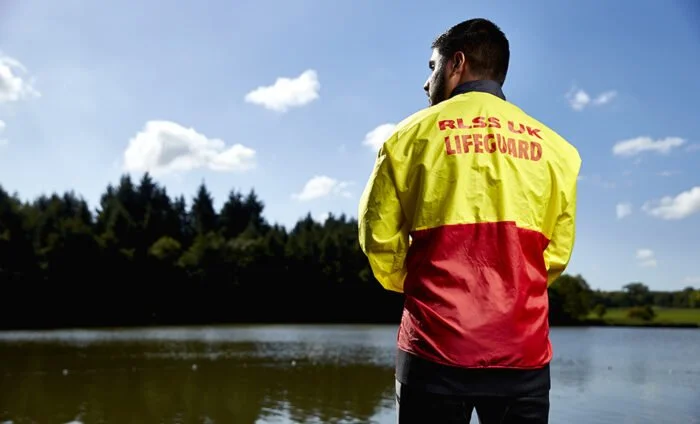
The Open Water Lifeguard (OWL) qualification enables candidates with no previous lifeguard experience to become qualified.
By attaining this qualification candidates will have been assessed as competent to provide supervision and rescue cover for planned, organised and risk-assessed activities in open water (still, non-tidal).
-
Section 1
The Open Water Lifeguard, environment, hazards and supervision
Section 2
Responding to an emergency and taking action
Section 3
CPR and First Aid
-
OWL candidates should have experience of participating in a variety of open water activities in a variety of venues. Formal evidence (certificates etc) is not required, but it should be highlighted that candidates with no experience of open water are likely to find the workshop very challenging
Be 16+ years old
Be able to complete a continuous swim of at least 400 metres in a pool
Be able to dive to a depth of up to two metres
-
Anyone interested in working in lake water parks, working as safety at tri events or any open water event. This does not cover you to work in a swimming pool or as a beach lifeguard.
-
3 days in total. 8 hours per day. 3rd day is assessment day.
Continuous assessment during the course plus a final independent assessment (practical and oral) where candidates must show competence in applying skills promptly, safely and effectively. There is no written exam.

National Surf Coach
Lifesaving Award
The National Surf Coach Lifesaving Award (NSCLA) aims to be instrumental in developing surf coaches in Ireland & UK.
To become a qualified surf coach in the UK, you must initially undertake a suitable lifesaving award before enrolling on the instructor/ coach course.
-
The NSCLA covers group management and supervision, First Aid, Life Support, and pool and open water skills. The course is physically demanding and includes swimming to set times and lifting. The NSCLA comprises three modules; you must successfully pass all three to qualify.
Module 1 – The beach environment, hazards, and supervision
Module 2 – Rescue skills in surf environments
Module 3 – First Aid and Life support
-
Each candidate attending a NSCLA course must:
Be 16-years-old or over at the time of assessment.
Have a good level of fitness.
Surface dive to a depth of 1.5 metres.
Be competent at swimming in the sea.
Before the course, candidates must be able to swim at least 200 metres in a pool (a recommended length of 25-metres, but not less than 20-metres).
For the assessment, candidates must be able to swim 300m in a pool in 8 minutes or less using a continuous front-facing stroke and showing urgency.
-
Anyone interested in becoming a qualified surf coach in the Ireland & UK, you must initially undertake a suitable lifesaving award before enrolling on the instructor/ coach course.
-
The NSCLA course length is a minimum of 20 hours, followed by a practical assessment on group management/ supervision, First Aid, Life Support, swimming pool and ocean skills.
The NSCLA assessment takes place at the end of the course. It determines your competence, skills, and knowledge of working as a surf coach and assesses your ability to apply the skills and knowledge learnt in a surf environment.
The assessment falls into:
Group management, supervision and First Aid theory
Life support practical
First Aid practical
Ocean skills
Pool skills

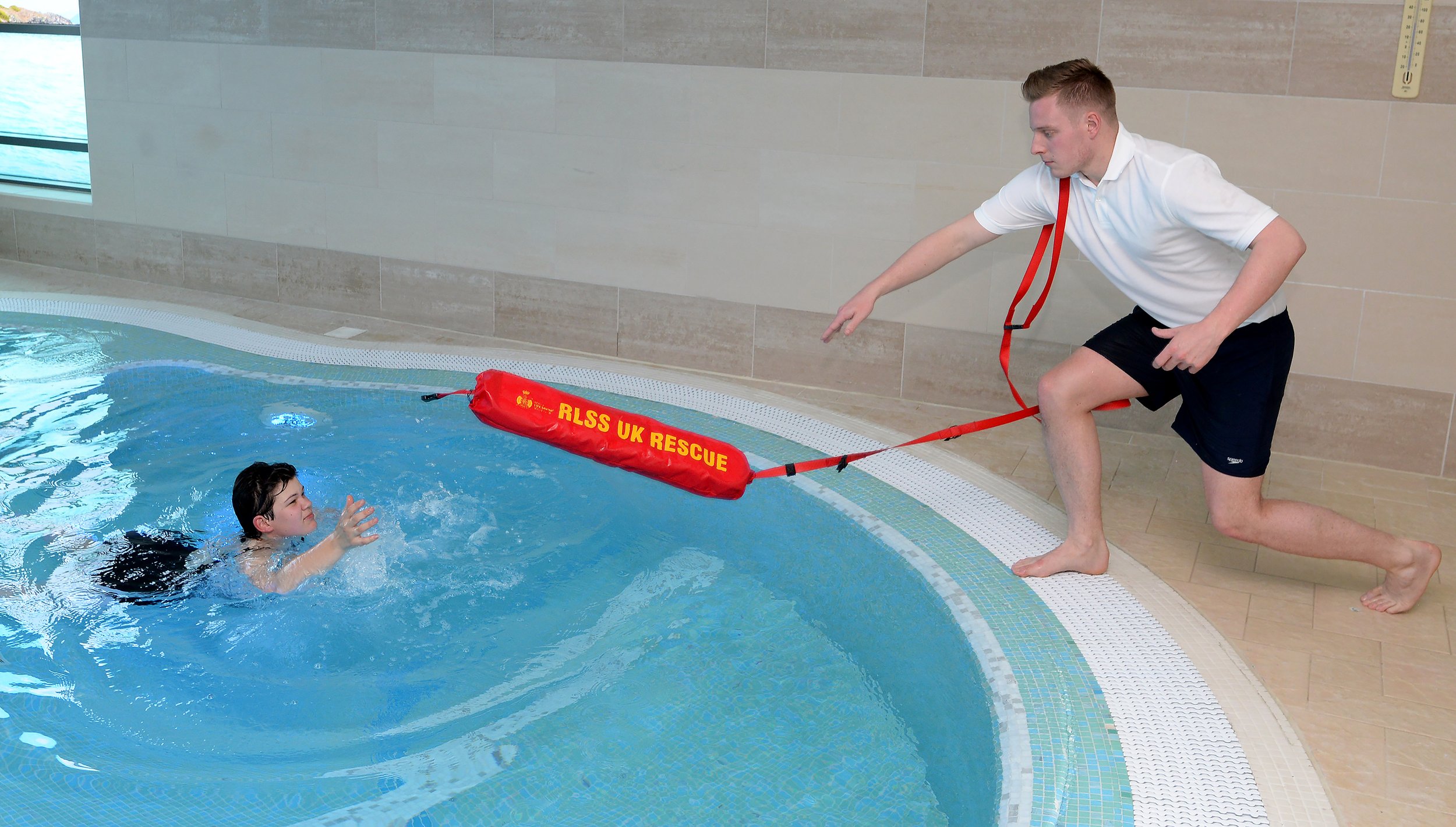
The Swimming Pool Emergency Rescue Award is designed for individuals who have a responsibility to respond to a swimming pool in the event of an emergency, by performing a rescue, or assisting a lifeguard team.
The Swimming Pool Emergency Rescue Award is not intended to replace a lifeguard qualification, such as the National Pool Lifeguard Qualification (NPLQ). The NPLQ includes more detailed training and content to prepare someone to supervise a swimming pool directly.
Swimming Pool
Emergency Rescue Award
-
The Swimming Pool Emergency Rescue Award is 12 hours in duration and deliverable within two days.
Topics covered during the course include;
Section One – The Emergency Rescuers Role, Pool Safety Operating Procedures and Safety Information
Section Two – Responding to an Emergency and the Emergency Action Plan
Section Three – CPR, First Aid and AED
-
Be able to swim on front and back
Be able to surface dive to the deepest part of the pool and climb out without help and without using steps or ladders (where venue design permits)
Be ages 16 or older at the beginning of the course
-
Anyone who works in a facility where there is a swimming pool with no direct supervision.
This training is intended to support safer swimming at small and shallow pools (less than 170m² and not deeper than 1.5m) such as typically found at some hotels, leisure clubs or private facilities.
It is also useful for ancillary staff, such as pool attendants and service staff, who may act as support to the lifeguard team.
This course is NOT a lifeguard qualification.
-
2 days in total. 8 hours per day.
Continuous assessment during the course plus a final independent assessment (practical and oral) where candidates must show competence in applying skills promptly, safely and effectively. There is no written exam.

Aquatic Therapy Shallow
Pool Rescue Award
The Aquatic Therapy Shallow Pool Rescue Award (ATSPRA) is a supervision and rescue qualification for therapists, teachers and support staff working on the poolside or in the water during activities such as, aquatic therapy or therapeutic exercise/play. The qualification is suitable for use in shallow pools where the rescuer will not be required to swim to perform a rescue, with water no deeper than the rescuers chest depth.
-
This course teaches the Teacher/therapist, risk assessment and pool safety
Intervention, rescue and emergency action
CPR and first aid
-
Participants should have Basic English skills and good swimming abilities. They must be able to swim 25m continuously on their front and on their back and be able to dive to the floor of the pool (max.1.5m). Minimum age: 16 years.
-
This is a supervision and rescue qualification for therapists, teachers and support staff working on the poolside or in the water during activities such as, aquatic therapy or therapeutic exercise/play. This course is NOT a lifeguard qualification.
-
2 days in total. 7 hours per day.
Continuous assessment during the course plus a final independent assessment (practical and oral) where candidates must show competence in applying skills promptly, safely and effectively. There is no written exam.

National Rescue Award for Swimming Teachers and Coaches
The National Rescue Award for Swimming Teachers and Coaches (NRASTC) is a supervision and rescue qualification for teachers working on the poolside or in the water during programmed activities, such as a swimming lesson. It is suitable for teachers working in a wide range of swimming pools, including pools where the water is deeper than the teacher’s standing depth.
-
The NRASTC course is 14 hours and deliverable in two days.
Topics covered during the course include:
The teacher, swimming pool, and class management
Intervention rescue
Emergency action
CPR and First Aid
-
The NRASTC course is open to anyone who is 16-years-of-age or older at the date of the assessment and able to:
Swim a minimum of 50 metres on your front and back
Surface dive to the deepest part of the pool
Climb out unaided without using steps or ladders (where venue design permits).
-
NRASTC is a supervision and rescue award for swimming teachers, coaches and (or) instructors working during programmed activities, such as swimming lessons.
-
The NRASTC course is 14 hours and deliverable in two days.
Continuous assessment during the course plus a final independent assessment (practical and oral) where candidates must show competence in applying skills promptly, safely and effectively. There is no written exam.

National Pool Supervisor
Qualification
The National Pool Supervisor Qualification (NPSQ) is a two-day course aimed at staff responsible for supervising lifeguards and managing essential health and safety within a leisure centre or swimming pool environment.
-
The National Pool Supervisor Qualification (NPSQ) is a two-day course aimed at staff responsible for supervising lifeguards and managing essential health and safety within a leisure centre or swimming pool environment.
Enhances your knowledge of why Risk Assessments, PSOP’s and Safe Systems of Work are in place to ensure a safe work environment, for both staff and customers.
Gives you a basic understanding of the laws and industry guidelines that you and your team need to comply with.
Helps you understand how to manage your team and provide feedback.
An ideal course for newly appointed Leisure Supervisors or Duty Managers.
The NPSQ is suitable for Lifeguards wishing to progress in their career or for employers wanting to upskill their employees to manage lifeguards, team members and essential health and safety.
Courses can be designed to be bespoke for employers, making the course specific to an organisation detailing procedures and policies.
-
This qualification is aimed at candidates aged 18+ who have a specific responsibility (paid or unpaid/voluntary) for managing and supervising a swimming pool environment.
-
Those who are duty managers/leaders in Leisure centres, or those aspiring to be Duty managers/leaders.
-
2 days in total. 8 hours per day.
Continuous assessment during the course plus a written exam at end.

National Water Safety
Management Programme
The NWSMP National Water Safety Management Programme (NWSMP) embraces contemporary approaches to risk management by balancing the need for simple proactive safety management practices with a strong focus on preventative measures, and effective emergency response skills.
-
The NWSMP comprises three progressive levels, allowing you to construct a bespoke training programme to suit your specific operational and individual needs:
Level 1 – Compulsory for those working or supervising near water who do not intend to get into the water, e.g., supervision of field trip(s).
Level 1 modules include:
Water Safety Awareness Module
Occupational Flood Safety
Aquatic Personal Protective Equipment
Level 2 - Low-level water activity for those who intend to stay within the standing depth area(s), e.g., working at the margins, pond dipping etc.
Level 2 modules include:
Environment-Specific Module: Beach
Environment-Specific Module: River
Environment-Specific Module: Still Water
Life Support
Level 3 - In Water Rescue aimed at programmed activities but not free-swimming. For those with clients/people under supervision who might be swimming out of their depth, e.g., supervision of canoeing, kayaking, relays, etc.
Level 3 modules include:
In-Water Rescue
Emergency and Incident Management
-
Each candidate attending an NWSMP course must:
Be 16-years-old or over at the time of assessment.
-
The course is relevant to a wide range of sectors, including teaching (field trips), construction, environmental health, leisure, and emergency services, fulfilling the water safety training needs of a wide range of users (reflecting the range of activities that take place in and around the water’s edge).
-
The guided learning hours for the NWSMP is broken down into the following:
• Water Safety Awareness – 6 Hours
• Inland Waterways Module – 8 Hours
• Coastal Waterways Module – 7 Hours
• Inland & Coastal Waterways Combined Module – 11 Hours
This is made up of theory and practical training (excluding breaks). Candidates may also be required to complete self-study (independent learning) for consolidation and preparation for assessments.
The NWSMP assessment takes place at the end of each level/module. It determines your competence, skills, and knowledge of working near/in water and assesses your ability to apply skills and knowledge in the relevant environment.